
For as long as most of us can remember, buying cookware in India meant walking into a store, comparing a handful of steel pans by weight and price, and picking whichever one felt sturdiest. The category ran on functional specs, price tiers, durability claims, and shelf space at the local retailer. Nobody thought about their tawa the way they thought about their sneakers or their skincare.
That’s changed, fast. A new generation of challenger brands has quietly flipped the starting question. Instead of asking “how do we build a better pan,” they’re asking “what’s actually wrong with how people experience this category?” That’s a small shift in wording but a massive shift in strategy, and it’s worth understanding if you care about brand building at all, not just kitchenware.
This piece looks at six brands leading that shift; Cumin Co., Ember, Asai, Kroslo, Beyond Appliances, and NUUK, and pulls out the playbook underneath their growth.
The Strategic Shift: From Product-First to Tension-First
Legacy brands start with the object. New-age brands start with the friction the object causes in someone’s life.
Think about it this way: nobody wakes up wanting a “3-ply stainless steel pan.” They wake up frustrated that their current pan is heavy, stains easily, or might be leaching something unpleasant into their food. Once a brand starts from that frustration instead of from the spec sheet, cookware stops being a commodity and starts being a lifestyle decision.
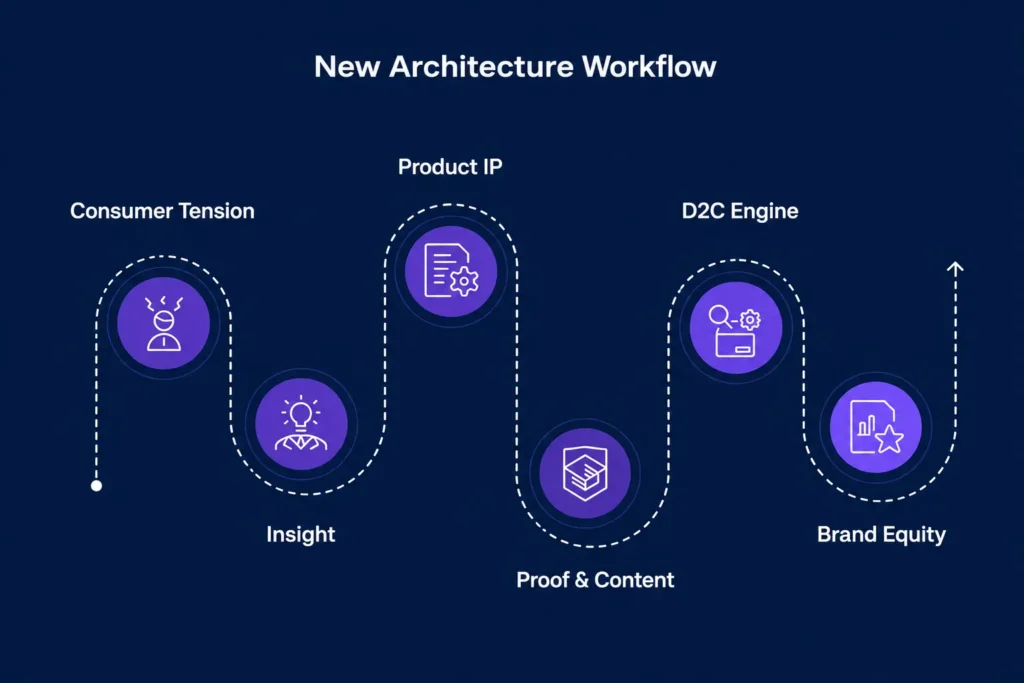
It’s a loop, not a line, feedback from the D2C storefront feeds back into product development, which feeds new proof points, which feeds new content, and so on.
| Brand | Category | Consumer Tension | Strategic Response |
| Cumin Co. | Cookware | Healthy cookware tends to be heavy, hard to clean, or just not good-looking | Enamel-coated “Everyday Healthware” designed around how Indians actually cook |
| Ember | Cookware | Safety usually comes at the cost of performance or design | Proprietary material science (Arcilla™, Thermoclad™) paired with premium looks |
| Asai | Cookware | People don’t trust vague “non-toxic” claims anymore | Lab-verified, microplastic-free testing as the core pitch |
| Kroslo | Cookware | Cast iron cooks beautifully but rusts, and it’s heavy and high-maintenance | Re-engineered cast iron built for high-heat Indian cooking, “Metal Meets Masala” |
| Beyond Appliances | Appliances | Spec-heavy appliances don’t actually solve everyday kitchen problems | Problem-first engineering, plug ‘N’ Play chimneys, smart hobs |
| NUUK | Appliances | Home interiors have gotten better, appliances are still generic | Design-forward appliances people want to display, built openly with the community |
Six Brands, Six Routes to Differentiation
1. Cumin Co.: Health Meets Modern Indian Life
Cumin Co. built its identity around how urban Indian households actually cook, eat, and clean up afterward, not around health as some kind of compromise. Enamel-coated cast iron gets paired with everyday usability and design that doesn’t look clinical. What’s interesting operationally is how tightly their performance marketing and creative teams work together, treating ad creative itself as a performance lever, tracked against CAC, ROAS, MER, and contribution margin in near real time.
2. Ember: Turning Material Science Into Brand Equity
“Ceramic-coated” is generic. “Arcilla™” is not. Ember’s whole strategy hinges on this distinction, they trademark their material innovations (Arcilla™, Thermoclad™, TitaniumClad™) instead of describing them in plain, forgettable language. Backed by 40+ performance tests and chef endorsements, that IP becomes a genuine moat rather than a marketing flourish.
3. Asai: Making Trust the Product Itself
In a market flooded with vague “non-toxic” claims, Asai went the other direction entirely: “Lab-approved. Microplastic-free. Made for Indian cooks.” Every batch gets tested, and the reports are published, not hidden behind a customer service email. During high-intent shopping moments like Prime Day, Asai leans on educational content, buying guides that walk people through PFAS and PTFE safety, folding education directly into the acquisition funnel instead of treating it as a separate blog exercise.
4. Kroslo: Proof as Entertainment (“Metal Meets Masala”)
Kroslo took the traditionally boring job of product testing and made it the whole show. Their cookware gets scraped with metal spoons, blasted with high-heat tadkas, and put through rapid temperature swings, all on camera. It’s simultaneously stress-testing, education, and entertainment, which means it does the job of three separate content categories in one video.
5. Beyond Appliances: Engineering for Real Frustration
Beyond moved away from spec-sheet marketing toward solving actual daily annoyances, a Plug ‘N’ Play chimney that doesn’t need an electrician, smart-timer hobs that take the guesswork out of cooking. They’ve scaled this through creator-led storytelling at a genuinely large scale (231M+ views), which let them shift from tactical performance ads into something closer to a masterbrand.
6. NUUK: Designing in Public
NUUK’s insight was almost embarrassingly simple once you hear it: Indian kitchens have gotten a serious design upgrade over the last decade, but the appliances sitting in them are still plastic and forgettable. Their “Build Room” initiative invites customers into the actual product design process, which does double duty, it improves the product, and it turns development itself into brand storytelling.
The Strategic Comparison Matrix
A qualitative read on where each brand puts its strategic weight:
| Strategic Dimension | Cumin | Ember | Asai | Kroslo | Beyond | NUUK |
| Consumer-Problem Led | ●●● | ●● | ●●● | ●●● | ●●● | ●●● |
| Health & Safety Positioning | ●●● | ●●● | ●●● | ●●● | ● | ●● |
| Proprietary IP / Named Tech | ●● | ●●● | ●●● | ●●● | ●● | ●● |
| Proof & Lab Demonstration | ●● | ●● | ●●● | ●●● | ●● | ●● |
| Design-First Aesthetics | ●●● | ●●● | ●● | ●● | ●● | ●●● |
| D2C & Growth Integration | ●●● | ●●● | ●●● | ●●● | ●● | ●●● |
| Community Co-Creation | ●● | ●● | ●● | ●● | ●● | ●●● |
● Emerging focus | ●● Meaningful asset | ●●● Core strategic driver
The Old Funnel vs. The New Flywheel
The real structural break from legacy marketing isn’t any single tactic, it’s that legacy brands kept brand, product, content, and performance marketing as separate departments that barely talked to each other.
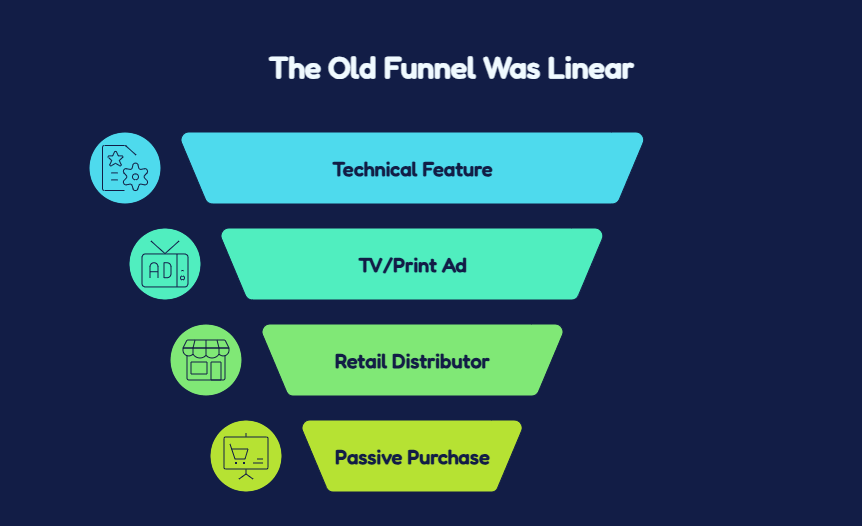
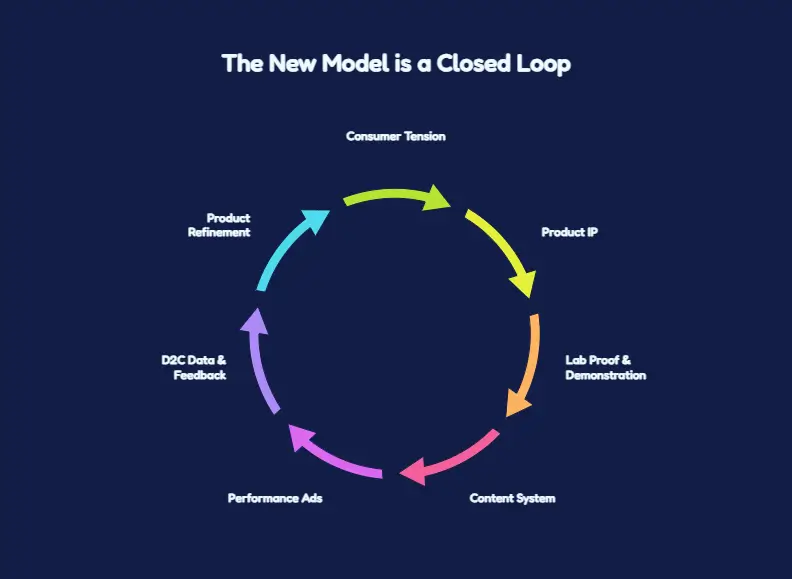
D2C, in this model, isn’t just a checkout page. It’s a live feedback radar, it tells the brand what messaging lands, what objections keep coming up, and what’s actually driving demand, before that learning gets scaled into Amazon, quick commerce, or physical retail.
Five Shifts Every Brand Leader Should Notice
- From product specs to consumer problems: positioning starts at the friction point (maintenance headaches, microplastic anxiety, an ugly countertop), not the feature list.
- From unbacked claims to visible proof: “best quality” is being replaced by downloadable lab reports and on-camera stress tests.
- From campaigns to a continuous content engine: demonstration videos aren’t a one-off campaign; they double as organic content, ad creative, and trust-building, all at once.
- From channel sales to a D2C control tower: first-party data from direct sales now informs how brands show up on quick commerce, marketplaces, and physical retail.
- From function to culture: the language itself is shifting, from “hard anodised 3-layer” to “modern Indian kitchen,” “clean cooking,” “engineered to delight.”
Where the Cracks Might Show
None of this is risk-free. As the category matures, a few vulnerabilities are worth watching:
- Category convergence. When every single brand claims to be “non-toxic, premium, and design-led,” that positioning stops meaning anything distinct.
- Proof fatigue. Lab reports were a differentiator a few years ago. Once every brand has one, proof alone won’t move the needle the way it used to.
- Dependence on paid ads. A heavy reliance on Meta and Google leaves margins exposed whenever ad costs climb or creative fatigue sets in.
- The online-to-offline gap. The agility that makes a D2C brand work doesn’t automatically translate when the same brand tries to scale into physical retail, that’s a different operating muscle entirely.
- The promise-experience gap. Elevated storytelling raises expectations. If the product doesn’t hold up over years of actual use, that gap becomes a brand liability fast, not a slow one.
Where This Is Actually Headed
Nobody buys a pan in isolation, they’re buying into a better version of how their kitchen, and by extension their home, feels. The brand that eventually wins this category probably won’t be the one with the single best pan or the flashiest chimney. It’ll be whoever manages to fuse health, material safety, design, everyday Indian cooking utility, and genuinely thoughtful engineering into one coherent kitchen lifestyle, not six separate selling points bolted together.
That’s the real battleground. Everything else, the lab reports, the trademarked coatings, the stress-test videos, is just how brands are earning the right to make that claim.