


In an era of endless content, AI-generated creativity and relentless advertising, the brands that win will not necessarily be the loudest. They will be the ones that give people a reason to listen.
Somewhere along the way, marketing started behaving as though attention were its birthright.
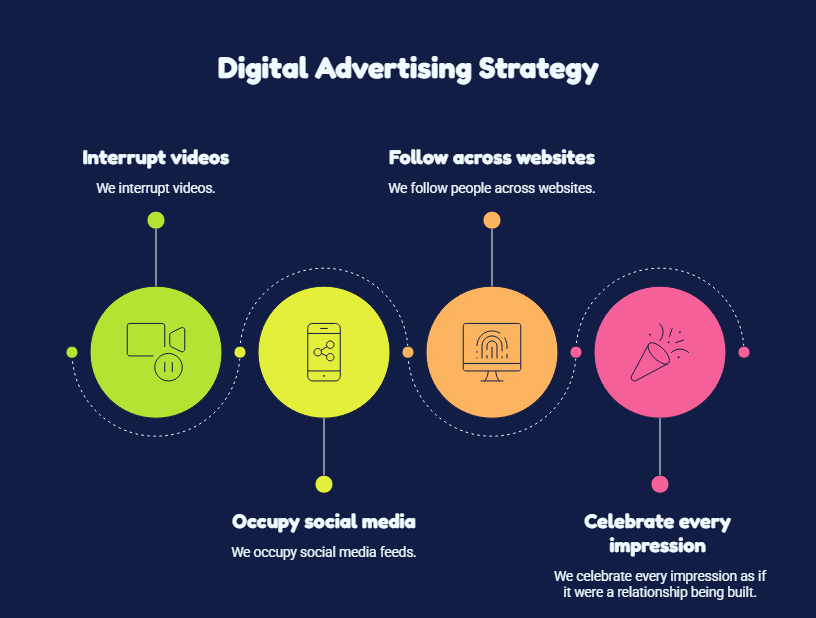
We interrupt videos, occupy social media feeds, follow people across websites and celebrate every impression as if it were a relationship being built.
Now, with AI, we can do all of this faster. Ten posts become a hundred. One campaign becomes twenty variations. Content calendars are filled before anyone has asked whether the content deserves to exist.
But here is an uncomfortable question:
Are we becoming better at communicating, or simply more efficient at interrupting?
The audience has not signed a contract promising to watch our advertisements, read our captions or remember our brands.
Attention is not owed. It is earned.
And perhaps the most underrated principle in marketing today is also the simplest: respect the person on the other side of the screen.
The Attention Economy Has a Respect Problem
Modern marketing has given us remarkable tools to reach people. We can identify audiences, personalise messages, optimise campaigns in real time and measure performance down to individual actions.
Yet, somewhere in this pursuit of precision, we have started treating people like collections of data points.
A consumer becomes a target audience. A website visitor becomes a retargeting opportunity. A missed conversion becomes a reason to serve another advertisement.
The technology is impressive. The underlying behaviour, sometimes, is not.
Think about the last time you searched for a product and were followed by advertisements for it for the next two weeks. Or the number of promotional messages you received from a brand simply because you once expressed interest in it.
Was the experience helpful? Or did it make you want to avoid the brand?
There is a difference between being relevant and being relentless.
Just because a brand can reach someone repeatedly does not mean it should.
The objective of marketing is not to occupy every available moment in a consumer’s life. It is to become meaningful in the moments that matter.
When More Content Becomes Less Communication
The pressure to remain visible has created an interesting paradox.
Brands are publishing more content than ever, but more content does not automatically create more meaning.
Social media calendars are packed. Every occasion becomes an opportunity for a post. Every trend becomes a potential reel. Every platform demands a constant supply of creative assets.
And increasingly, AI makes it possible to produce this content at extraordinary speed.
But speed is not the same as substance.
A hundred perfectly formatted posts can still communicate nothing distinctive about a brand. A beautifully designed campaign can still fail to make anyone feel anything. A caption can be grammatically flawless and strategically forgettable.
When every brand uses similar prompts, follows similar trends and produces similar content, the result is predictable: a crowded marketplace filled with communication that looks different but feels remarkably alike.
This is where human judgement becomes critical.
AI can help marketers research, analyse, generate options and work more efficiently. But someone still needs to decide what is worth saying, why it matters and whether it sounds like the brand or simply like everyone else.
The real competitive advantage is no longer just the ability to produce content. It is the ability to produce something worth consuming.
Respect Is Not Just Good Manners. It Is Good Brand Strategy.
Respecting an audience does not mean making every advertisement polite or every piece of communication serious.
Humour can be respectful. Provocation can be respectful. A bold campaign that challenges conventional thinking can be respectful.
The distinction lies in whether the brand understands the audience or merely uses it as an opportunity for attention.
A brand that respects its audience does four things differently.
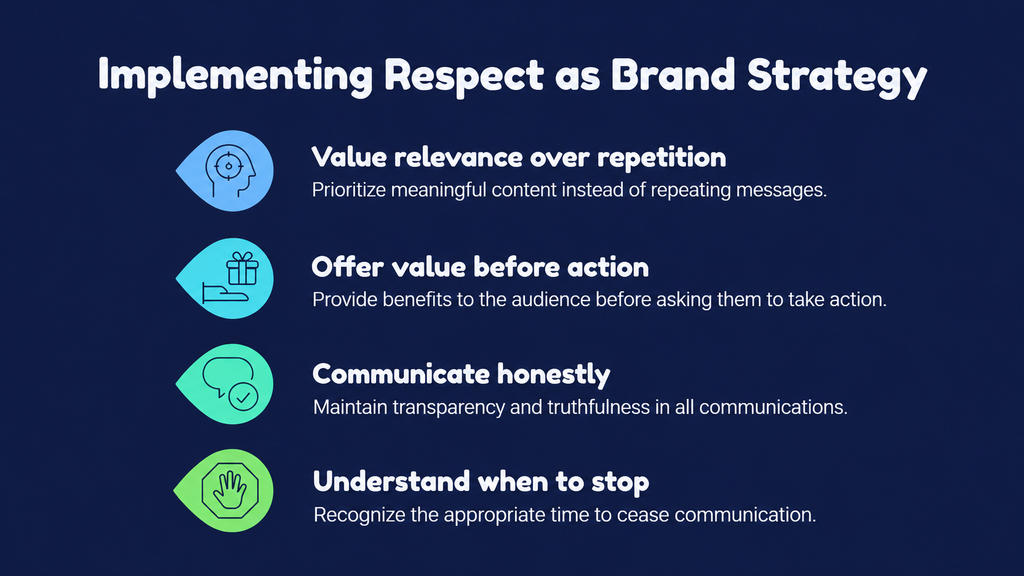
1. It values relevance over repetition.
Reaching the right person with the right message is more valuable than repeatedly reaching the same person with a message they have already ignored.
Frequency has a role in advertising. But frequency without relevance becomes fatigue.
2. It offers value before demanding action.
Not every interaction needs to end with “Buy Now”, “Register Today” or “Limited Offer”.
Sometimes, the most valuable thing a brand can offer is useful information, an entertaining experience, a fresh perspective or a story worth remembering.
People should feel that they received something in return for their attention.
3. It communicates honestly.
Exaggerated promises may generate clicks. Misleading headlines may generate traffic. Manufactured urgency may accelerate a purchase.
But a brand is not built at the moment someone clicks. It is built through the experiences and expectations that follow.
The promise made in advertising must survive contact with reality.
4. It understands when to stop.
Not every trend deserves participation. Not every cultural moment needs a branded response. Not every customer interaction needs another promotional message.
Sometimes, restraint is a sign of strategic clarity.
The ability to say less can be just as important as the ability to say something clever.
The AI Paradox: More Efficiency, Less Originality?
Artificial intelligence has opened extraordinary possibilities for marketing teams. It can accelerate research, assist with ideation, generate creative variations and help businesses do more with limited resources.
The problem begins when efficiency becomes the entire strategy.
If the brief is generic, the output is likely to be generic. If the thinking is borrowed, faster production will simply create more borrowed thinking. And if a brand has no distinctive point of view, AI cannot magically give it one just by generating more words.
The danger is not that AI will make every marketer less creative.
The danger is that organisations may begin to mistake the quantity of creative output for the quality of creative thinking.
A useful question for every marketing team is this:
If we removed our logo from this campaign, would anyone recognise that it belongs to us?
If the answer is no, the problem may not be the design, the platform or the algorithm. It may be the absence of a distinctive brand idea.
Use AI to improve the process. Use data to sharpen decisions. Use automation to eliminate repetitive work.
But protect the human qualities that make communication meaningful: curiosity, cultural understanding, empathy, imagination and the courage to express an original thought.
Technology should give creativity more room to breathe, not turn creativity into a production-line activity.
From Capturing Attention to Earning Trust
There is a reason people remember certain brands long after an advertisement has disappeared from their screens.
It is not always because those brands advertised more frequently or had the largest budgets. Often, it is because they stood for something recognisable, understood a genuine consumer need or communicated in a way that felt distinctive.
Attention can be purchased. Trust has to be built.
An impression is an opportunity to be noticed. It is not evidence of affection.
A click signals an action. It does not necessarily indicate loyalty.
A conversion may deliver a sale. It does not automatically create a lasting relationship.
This does not mean performance marketing is less important than brand building. Businesses need measurable outcomes, efficient acquisition and demonstrable returns on investment.
But performance and brand building should not operate as opposing forces.
Performance marketing can help businesses identify what resonates, reach relevant audiences and generate demand. Brand building gives people a reason to remember, prefer and return to the business.
The strongest marketing strategies recognise that a transaction is not the only measure of a relationship’s value.
The real opportunity lies in making every interaction contribute to something larger than the immediate click.
Five Questions Every Brand Should Ask Before Publishing
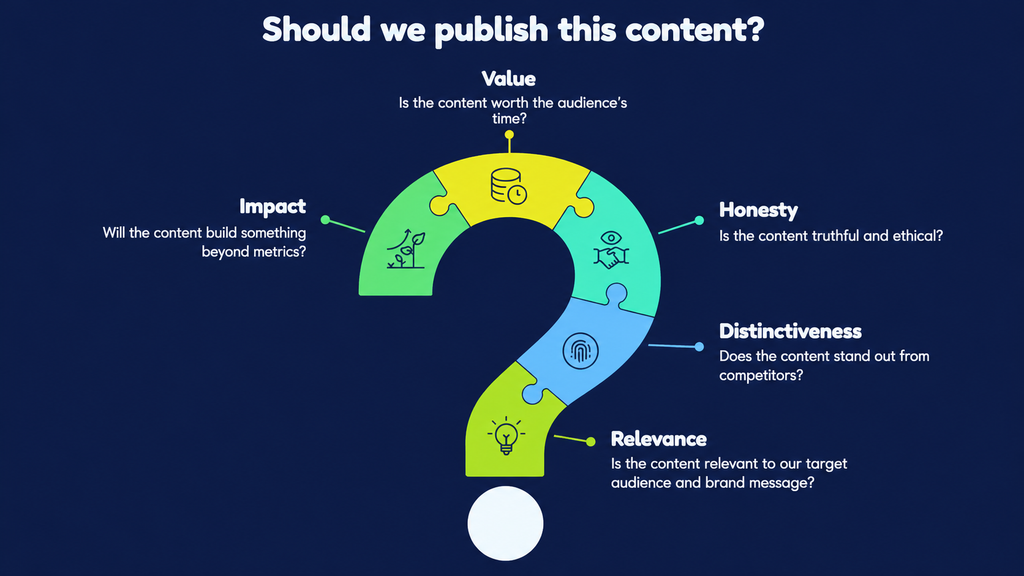
Before approving the next campaign, social media post or AI-generated creative, marketing teams should pause and ask:
- Is this relevant? Are we addressing a genuine audience need, interest or problem?
- Is this distinctive? Does it express something recognisable about our brand, or could any competitor publish it?
- Is this honest? Does the message set expectations that the actual product or experience can fulfil?
- Is this worth someone’s time? Are we offering information, entertainment, utility, emotion or a meaningful perspective?
- Will this build anything beyond a metric? Could this interaction strengthen familiarity, preference, credibility or trust?
Not every campaign will achieve all five objectives equally. Some advertisements need to drive immediate sales. Others need to build awareness or communicate a specific offer.
The purpose of these questions is not to make marketing slower or more complicated. It is to ensure that efficiency does not replace intention.
The Future Belongs to Brands That Respect Attention
As digital platforms become more crowded and AI makes content production increasingly accessible, the ability to publish more will become less remarkable.
What will matter is the ability to make people care.
The brands that stand out will not necessarily be those that post every day, follow every trend or appear in every feed. They will be the brands that understand their audiences well enough to know what to say, how to say it and when their message genuinely adds value.
They will use technology without surrendering judgement. They will pursue conversions without reducing every interaction to a transaction. And they will understand that every communication is an opportunity not just to gain attention, but to shape how people feel about the brand.
Marketing does not need to become quieter. It needs to become more thoughtful.
Because the ultimate measure of good communication is not simply how many people saw it.
It is whether anyone was glad they did.
Your audience doesn’t owe you attention. Give them a reason to give it to you.
At Adtric Solutions, we believe effective marketing begins with understanding people, not just reaching them. Because sustainable brand growth comes from combining strategic thinking, creative distinction and measurable business outcomes.