
Executive Summary
For decades, the power transmission industry has run on relationships. Projects are complex, buying cycles are long, and technical credibility matters more than polish. Decision-makers usually know the suppliers they trust, and business has traditionally moved through established networks, references, tenders and institutional ties.
But the way prospective customers discover, evaluate and shortlist companies has changed, and it’s changed faster than most industrial businesses have kept pace with. A company can have decades of engineering expertise, strong manufacturing capabilities and an impressive customer base, and still be almost invisible to a new generation of decision-makers who start their research online.
That was the challenge we ran into when we took over the communications mandate of a traditional power transmission company. The business had strong technical credentials, but its digital ecosystem was thin to the point of being almost absent.
So our mandate went well beyond “doing digital marketing.” It was about converting an established industrial business into a digitally discoverable, credible and consistently communicated brand, without pretending it was something it wasn’t.
The whole transformation came back to one idea: we weren’t trying to replace relationships with digital. We were trying to make the company’s expertise discoverable before the relationship even began.
1. The Starting Point: A Strong Business with a Weak Digital Presence
The company had most of the traits you’d expect from an established B2B industrial business. Its credibility had been built over years through technical expertise, manufacturing capability, customer relationships, industry networks, project experience, references and long-standing institutional ties.
None of that showed up online in any meaningful way. A few of the gaps stood out clearly:
- A traditional business model. Business development ran almost entirely on relationships, with very little reliance on digital channels for discovery.
- Almost no digital footprint, despite substantial technical capability behind the scenes.
- Relationship-led discovery. Prospective customers were far more likely to find the company through an existing network or a direct introduction than through a Google search.
- No organic brand discovery engine, there was little content that let someone researching power transmission solutions stumble onto the company on their own.
- Limited SEO presence. Real technical expertise simply hadn’t been translated into searchable content.
- A website that reads as an information page, not a strategic digital asset.
- No defined content strategy. Social media and other channels had no clear role or publishing rhythm.
- Fragmented brand communication, where events, presentations, social media and business development materials didn’t always speak with one voice.
- Limited thought leadership. The technical knowledge inside the organisation wasn’t being turned into public-facing expertise.
- Underused leadership equity. The experience and credibility of the leadership team was a real brand asset, but it barely showed up anywhere online.
- Limited audience segmentation. Communication was built around the company itself rather than around specific industries, geographies or customer types.
- Digital is treated as communication, not infrastructure. The bigger opportunity wasn’t to “post more”, it was to build digital infrastructure that could actually support reputation, discovery, consideration and business development.
2. The Strategic Shift
We didn’t try to make a traditional industrial company suddenly behave like a consumer brand. That would have backfired. Instead, we kept the fundamentals that had made the business successful, technical authority, engineering credibility, relationship capital, and built a digital layer around them.
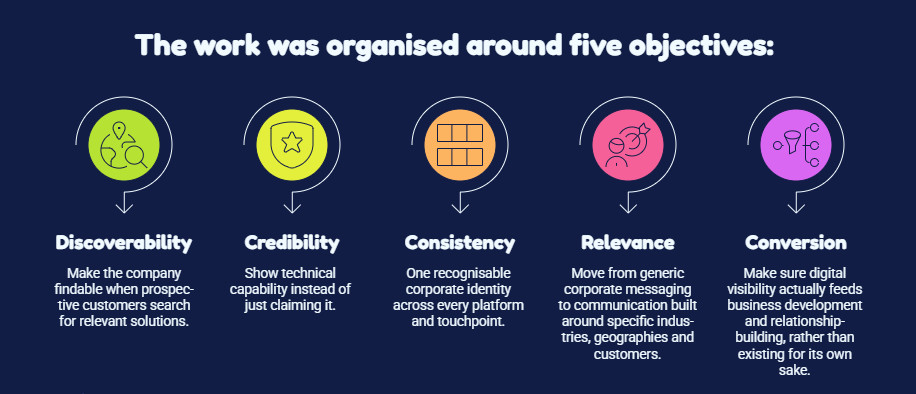
3. Building the Digital Foundation: The Website First
The first real intervention was the website. We treated it not as a digital brochure but as the company’s central knowledge and credibility platform, the place that had to do the work a salesperson usually does in a first meeting.
That meant real investment in technical depth: product and solution architecture, manufacturing capabilities, industry applications, certifications, infrastructure, leadership credibility, project storytelling, search-friendly content structure, and clear paths to inquiry.
The logic was simple. If someone heard the company’s name for the first time, the website needed to do the same work the sales team had always done face to face, establishing credibility fast. That shifted the website’s role from a static corporate presence to something closer to a 24×7 sales-enablement and credibility platform.
4. From SEO to the Age of AI Discovery
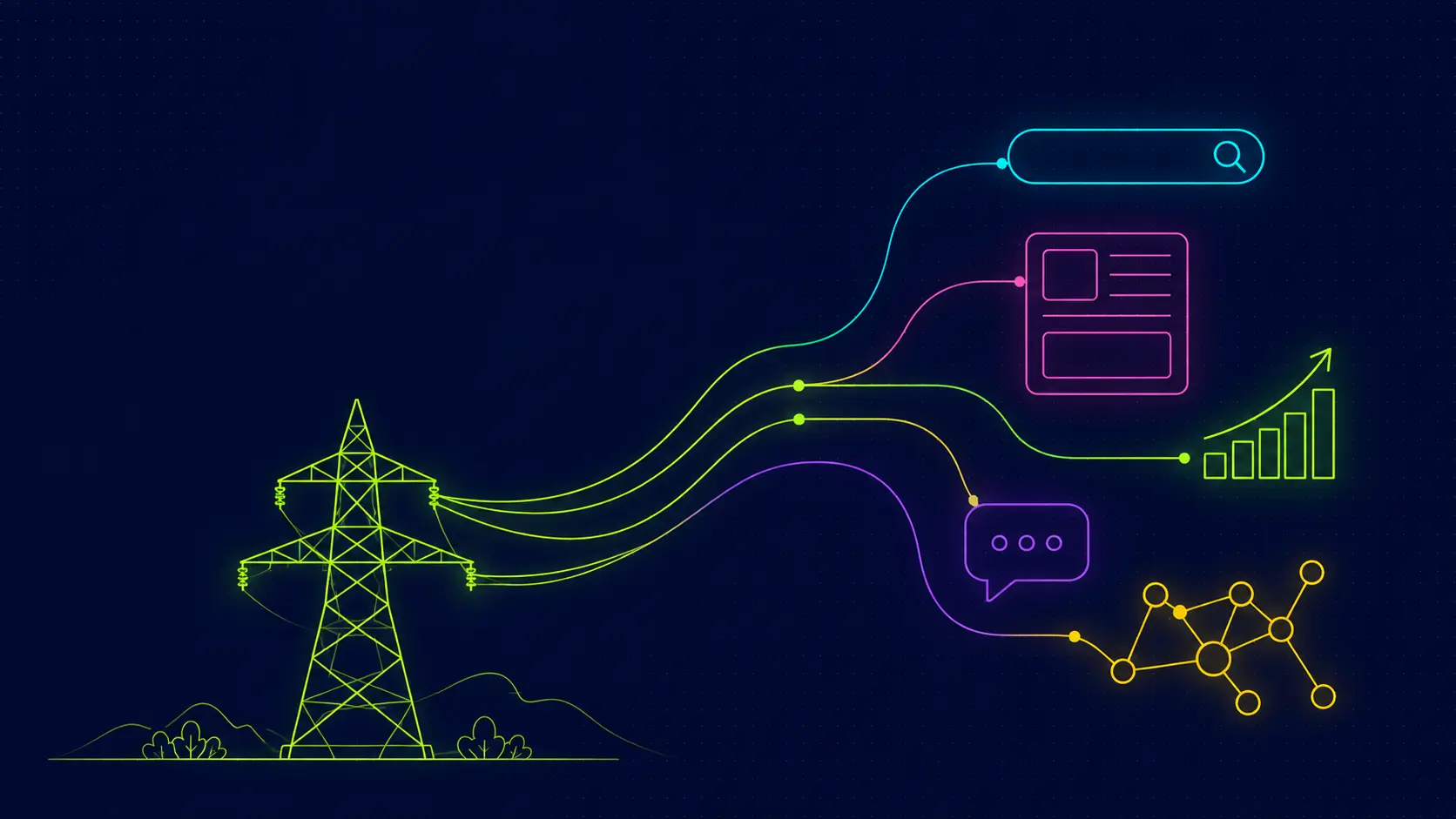
Once the foundation was in place, the next challenge was organic discovery. We built an SEO strategy around the company’s products, technologies, applications, industries and areas of technical expertise.
But the ground kept shifting. Search stopped being just Google results, AI-driven discovery, answer engines and generative search started changing how people research companies and solutions. So we expanded the strategy from SEO into SEO + AEO + GEO:
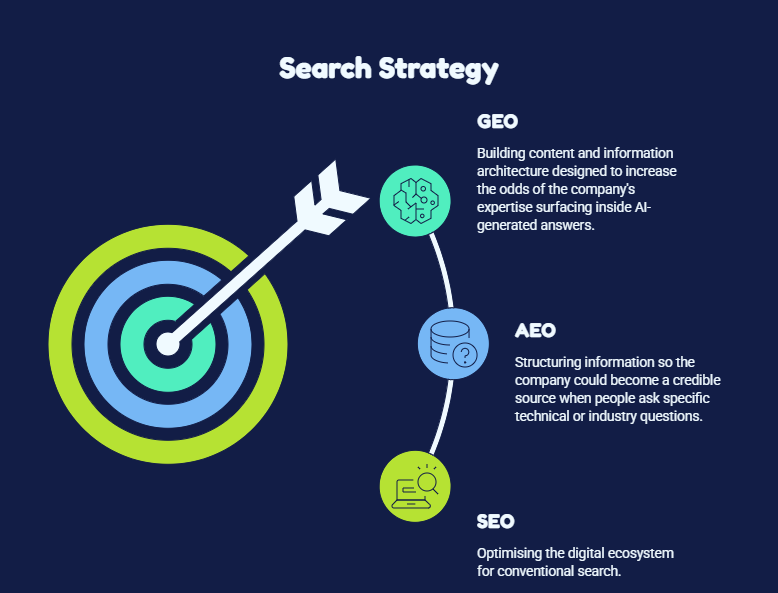
In short: the goal stopped being about ranking for keywords, and became about becoming a source of knowledge in the first place.
5. Turning Social Media into a Strategic B2B Channel
Social media was the next problem to solve. For an industrial B2B company, it can’t just be festival greetings, employee photos and the occasional corporate announcement, that’s noise, not strategy.
We built a content architecture around defined pillars, so every post had a job to do:
- Corporate Authority: Who the company is, what it stands for, where it operates.
- Technical Authority: Products, engineering, technology, applications, technical insight.
- Manufacturing Excellence: Production capability, quality systems, infrastructure, process.
- People & Leadership: Founder stories, leadership perspective, employee expertise, culture.
- Projects & Applications: How the company’s capabilities show up in real infrastructure.
- Industry Intelligence: Relevant developments across power transmission, energy and infrastructure.
- Brand Storytelling: The company’s journey, milestones, philosophy and where it’s headed.
6. Building Brand Awareness Beyond the Existing Network
Perhaps the biggest shift was moving from known-network communication to market-wide visibility. Digital channels let the company speak to people who had never been part of its immediate network, industry professionals, procurement teams, EPC companies, infrastructure firms, consultants, decision-makers, prospective international customers, industry influencers, potential employees, and investors.
In effect, the company could now start a conversation long before a sales call ever happened.
7. Country-Specific Digital Campaigns
As the company’s ambitions grew internationally, a single generic global message stopped being enough. Different markets have different infrastructure priorities, different decision-makers, different triggers. So we built campaigns around specific markets rather than replicating one global narrative everywhere, which gave the international presence more relevance without diluting the core identity.
8. Leadership as a Brand Asset
Traditional industrial businesses tend to have founders and senior leaders carrying enormous institutional knowledge, knowledge that usually stays inside boardrooms and client meetings. We started turning that experience into communication assets: leadership perspectives, industry observations, the company’s own journey, engineering philosophy, milestones, views on where the industry is heading, organisational values, and perspective on customers and markets.
That mattered because it added something distinct to the mix: human credibility behind the corporate credibility. A company can tell you what it does. A founder can tell you why it matters.
9. From Corporate Films to Capability Storytelling
Corporate films stopped being brand videos and became capability demonstration tools instead, built around manufacturing infrastructure, engineering capability, production process, quality systems, technology, scale, people, applications and organisational heritage.
The shift, in short, was from “we are a leading company” to “here’s the evidence for why we’re capable.” For technical B2B businesses, that distinction matters a lot more than it sounds.
10. Brand Films and Campaign Thinking
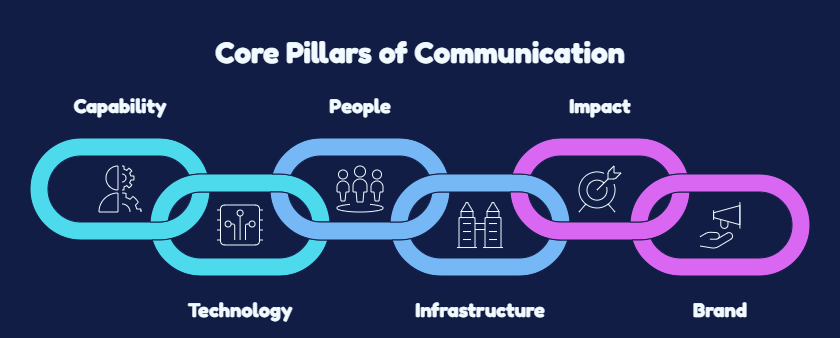
We also introduced campaigns designed to move the conversation beyond individual products, because a mature B2B brand needs a narrative bigger than its catalogue. The communication started connecting capability, technology, people, infrastructure and impact into one brand story, letting the company talk not just about what it manufactures, but about the role it plays in the broader power infrastructure ecosystem.
11. Targeted Communication for Potential Customers
Digital platforms opened up something that relationship-led marketing rarely allows: the ability to move from broad awareness to communication built around specific industries, geographies, applications, customer segments and decision-maker profiles.
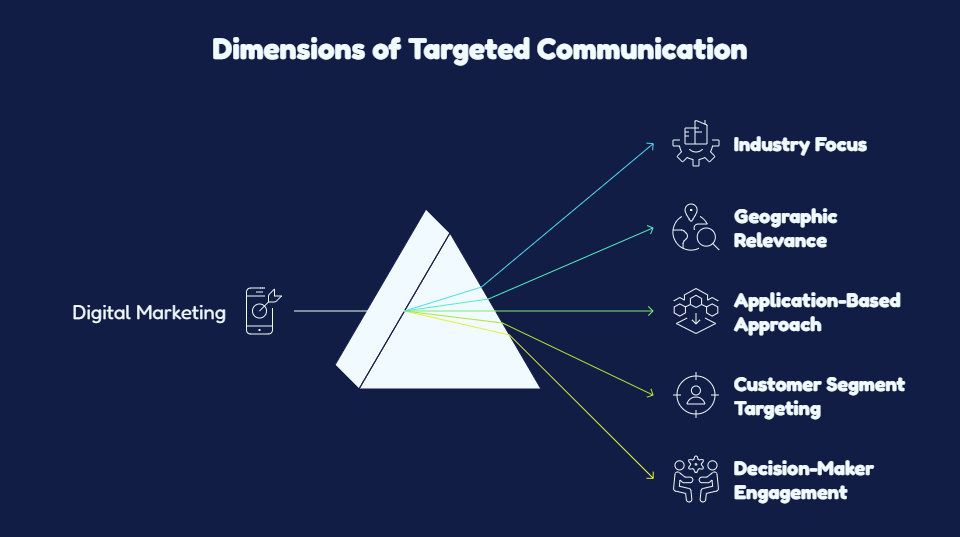
The underlying principle was simple, not every impression carries equal value, and relevance matters more than reach. The goal was to put the company’s capabilities in front of the people who actually had a business reason to care.
12. LinkedIn as a Strategic Business Platform
LinkedIn got dedicated strategic attention because of how directly it feeds B2B decision-making. It moved well past routine corporate updates to cover corporate positioning, leadership visibility, technical storytelling, industry commentary, manufacturing capability, employer branding, business milestones, thought leadership, market-specific communication and stakeholder engagement.
The result: the company could build professional familiarity with decision-makers long before the first formal meeting.
13. Creating a Consistent Brand Language
Industrial businesses communicate through dozens of touchpoints, events, presentations, exhibitions, brochures, corporate profiles, social media, videos, sales decks, digital campaigns, emailers, internal communication. We built structured brand collaterals and templates so all of it looked and sounded like it came from the same organisation, regardless of where someone encountered the brand.
Consistency builds recognition. Recognition builds familiarity. Familiarity builds trust, in that order, and it rarely works any other way.
14. Additional Best Practices We Introduced
A few other principles shaped the broader transformation:
Content as an organisational asset. Technical knowledge got treated as reusable IP that could become articles, videos, social posts, website content, decks and leadership communication.
Content repurposing. One technical subject could turn into multiple assets across platforms, which improved both efficiency and consistency.
Digital sales enablement. Website pages, capability decks, videos and content were built to support sales conversations rather than exist separately from them.
Reputation architecture. Communication was structured to build credibility across several dimensions at once, technical, corporate, leadership, manufacturing and industry expertise.
Always-on communication. The brand moved away from speaking up only around events and announcements, toward a steady presence through the year.
Analytics-led optimisation. Digital activity increasingly got judged against measurable indicators, visibility, engagement, audience quality, content performance, lead-generation potential.
Employer brand visibility. The same digital ecosystem became a way to show culture, people and capability to prospective talent, not just customers.
Crisis-readiness. A stronger digital infrastructure also means the organisation already has a communication system it can activate quickly if something goes wrong.
15. The Transformation in One View
| Before | After |
| Relationship-led discovery | Relationship + digital discovery |
| Minimal digital footprint | Structured digital ecosystem |
| Basic website | Technical digital knowledge platform |
| No structured SEO | SEO + AEO + GEO |
| Generic social presence | Strategic content architecture |
| Company-centric communication | Audience-centric communication |
| Limited leadership visibility | Founder and leadership storytelling |
| Corporate brochure mindset | Capability-led digital storytelling |
| Generic campaigns | Country- and audience-specific campaigns |
| Event-based communication | Always-on brand communication |
| Fragmented collateral | Consistent brand identity |
| Limited online awareness | Expanded digital brand visibility |
| Sales-led credibility | Digital credibility supporting sales |
| Offline reputation | Offline + online reputation |
16. The Larger Business Lesson
The most important takeaway from this transformation isn’t really about websites, SEO, LinkedIn or social media. It’s about how B2B business itself is changing.
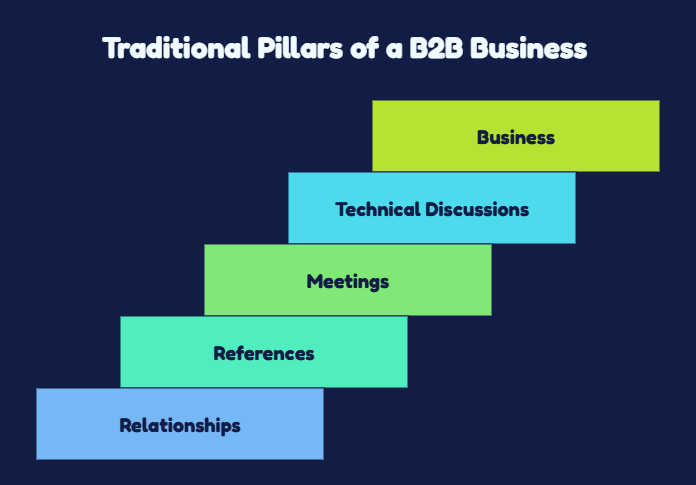
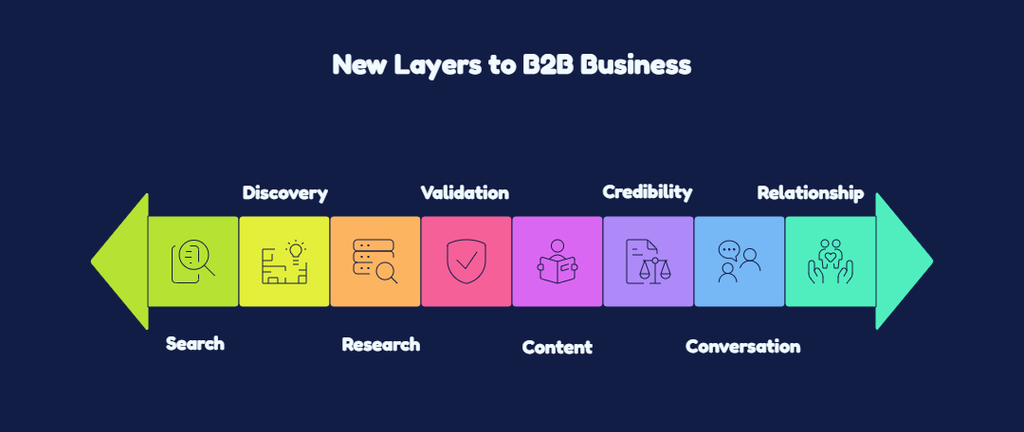
For decades, industrial companies could rely largely on a fairly linear path: relationships lead to references, references lead to meetings, meetings lead to technical discussions, and that leads to business. Today, there’s another layer stacked on top of that: search, discovery, research, validation, content, credibility, conversation, and only then, relationships.
Digital doesn’t eliminate the relationship. It just changes when the relationship starts. A potential customer might discover a company through a search, validate its capability on the website, understand the technology through a corporate film, get a feel for its expertise on LinkedIn, and only then approach the sales team. Which means the sales conversation now starts from a much higher baseline of awareness than it used to.
17. From Invisible Expertise to Visible Authority
The company always had technical expertise. What the transformation actually did was make that expertise visible, searchable, understandable and consistently communicated.
That’s really the opportunity in front of most traditional B2B businesses. They don’t need to become “digital-first companies.” They need to become digitally discoverable companies. Because a lack of digital visibility doesn’t mean a company lacks expertise, it just means the market doesn’t yet know where to find it.
Conclusion
The next phase of B2B brand building will increasingly belong to companies that combine relationship capital with digital discoverability. For established industrial organisations, that’s a genuinely powerful position to be in, their biggest assets already exist: experience, engineering, people, infrastructure, customers, knowledge, trust.
The real task is translating those assets into a digital ecosystem that people beyond the company’s existing network can discover, evaluate and trust. That was the whole point of this transformation, not to make a traditional power transmission company look like a digital brand, but to make its real-world strength visible in the digital world.