
Last month we sat down for a quarterly SEO review with a BFSI client. The numbers on the screen were not the problem. Branded search was up year on year. Organic conversions were up. Cost per qualified lead through organic was lower than every other channel they were running.
The problem was that the client wanted to discontinue SEO anyway.
He had spent the last quarter reading LinkedIn posts and watching reels about how AI was killing Google, how ChatGPT was the new search engine, how SEO had become a waste of money. By the time we walked into the room, he had already half-decided. The review meeting was, in his head, a courtesy.
We did not argue. We pulled up his Search Console, his Google Analytics 4, his SEMrush report and his AI Overview tracking side by side. Then we asked him to point at the single metric he was actually worried about.
He could not find one.
What he could find, when he looked, was an AI Overview now showing on roughly half of his priority queries, his brand cited inside it on the queries that mattered most, and a quietly rising branded search volume that no other channel in his marketing mix could plausibly explain. The work we had been doing for him had not stopped working. It had just stopped being legible to him, because the LinkedIn version of search had drifted so far from the dashboard version of it.
He kept the retainer.
That meeting is not unusual anymore. The shape of it is now playing out once a week, across categories, across budgets, across teams. The headlines have made SEO look like a dying line item. The data inside real accounts is telling a different story.
The panic, and why it is half right
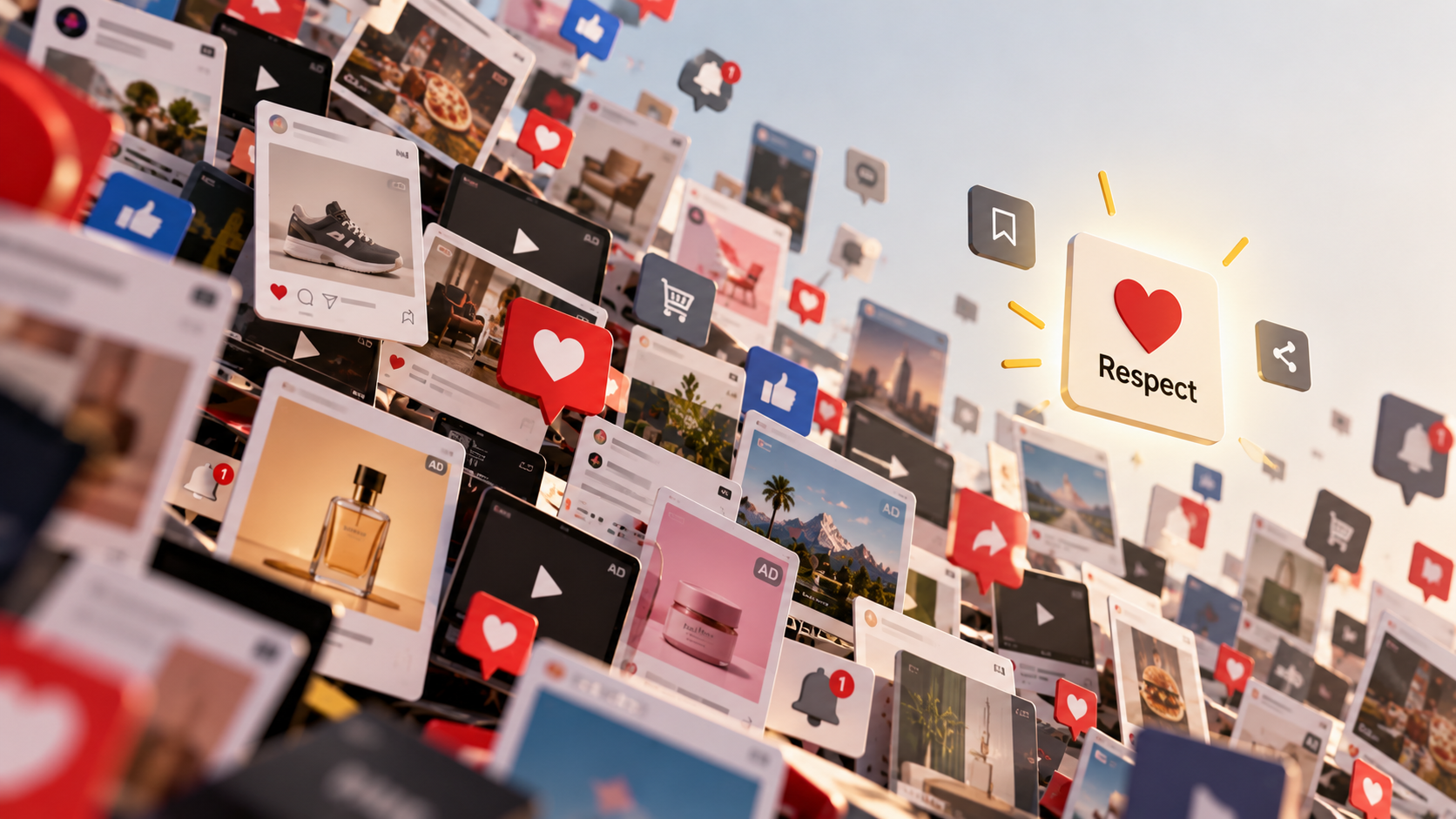
If you have been online in the last six months, you have heard some version of three claims. Google traffic is collapsing. ChatGPT is the new Google. SEO is a waste of money now.
None of those statements is fully wrong. CTR on Google queries that show an AI Overview has dropped by roughly 58 percent compared to queries without one, according to Ahrefs research published in December 2025. Roughly 48 percent of all Google searches now show an AI Overview. AI Mode, Google’s full chat-style search experience, runs on Gemini by default for over a billion monthly users as of Google I/O in May 2026. ChatGPT, Perplexity, Gemini app and Claude have all crossed the threshold where their referral traffic is small but the users they refer convert at very different rates.
None of those statements is the whole picture either. Roughly 87 percent of all search referral traffic to commercial websites still comes from Google, not from AI engines. Only about 4 percent of ecommerce queries show an AI Overview, so shopping SERPs are largely intact. Branded queries actually see roughly an 18 percent CTR lift when the brand is the cited source in the AI Overview. AI-search visitors, when they do click, convert at around 23 times the rate of classical search visitors, because the model has already done the qualification for the user before the click.
So both the panic and the celebration are wrong. The panic is wrong because SEO has not stopped working. The celebration is wrong because the SEO that used to work is not all of the SEO that is working now.
The shift, in one sentence
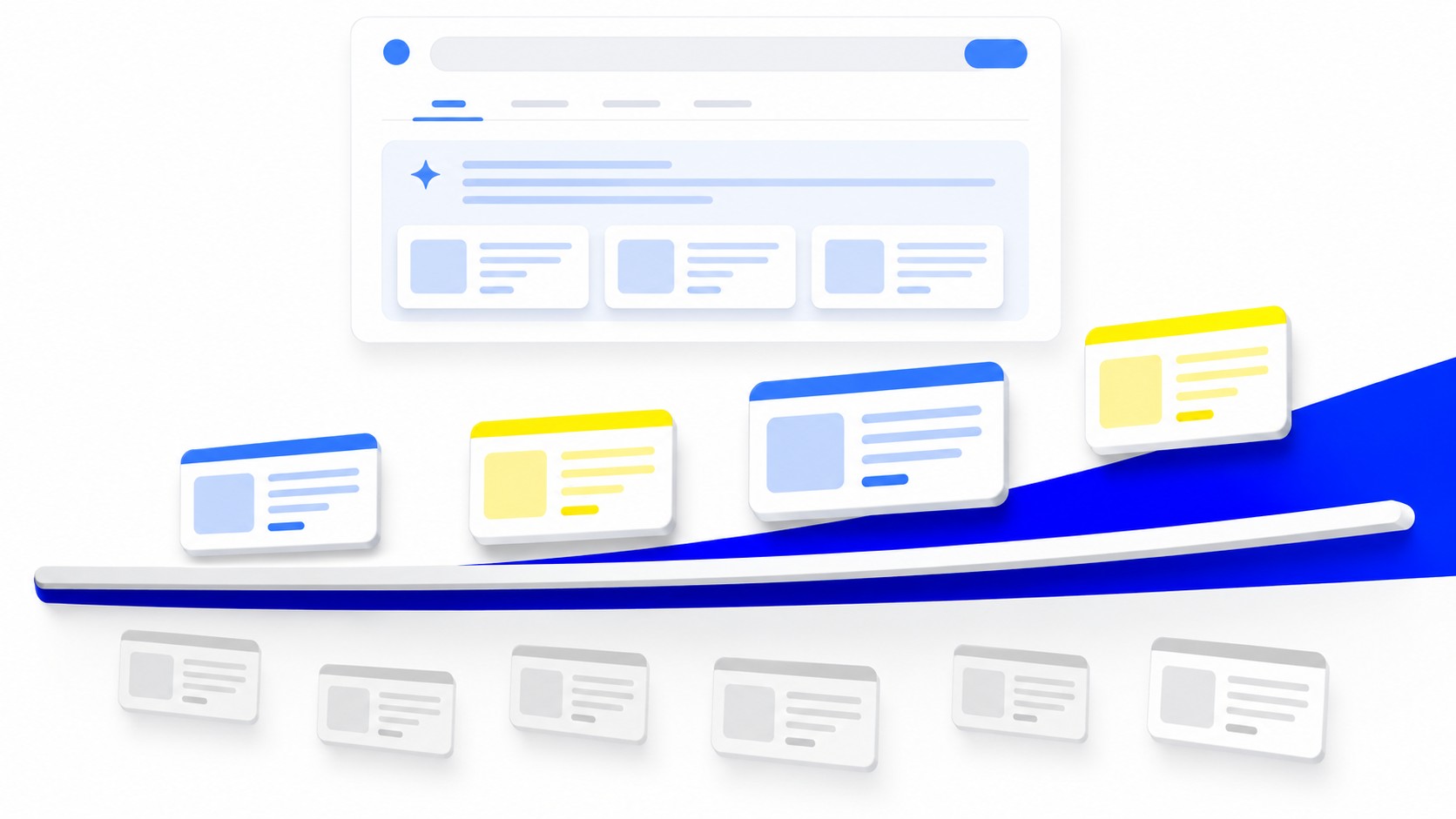
Search has gone from a list of links to a layered experience.
Classical organic results still exist. They still drive the majority of revenue for most categories. Sitting on top of them now are two more surfaces. Google’s own AI surface, which is AI Overviews and AI Mode. And the non-Google AI engines, which include ChatGPT, Perplexity, the Gemini app, Claude and Bing Copilot.
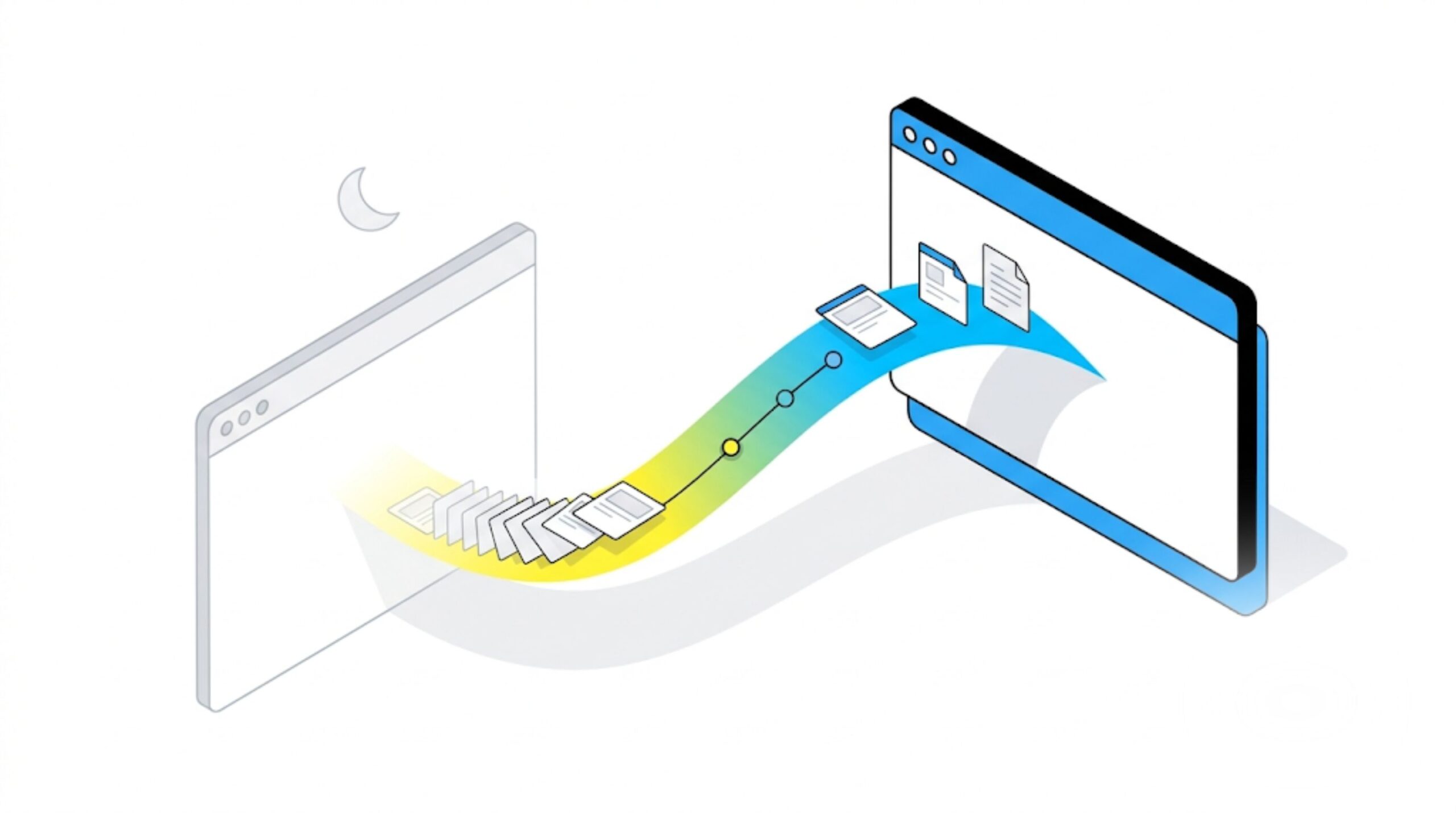
The work that ranks you on the first surface is what gets you cited on the second. The work that gets you cited on the second is what gets you mentioned on the third. One foundation, three doors. This is the part that took us a while to fully internalise inside our own playbook. SEO is now an umbrella discipline, not a channel.
What AI search actually changed in our work
Here is what has actually shifted in how we run SEO over the last twelve months. None of these are hypothetical. Each one is a change we have already made inside live client accounts, and the reasoning behind it.
1. Commodity content stopped earning its keep
The “10 tips for X” article. The “what is Y” piece. The “ultimate guide to Z” listicle. These used to compound traffic for years. They no longer do.
Google’s own AI Optimization Guide on Search Central, updated 5 June 2026, names this directly. It gives “7 Tips for First-Time Homebuyers” as its example of commodity content, and “Why We Waived the Inspection and Saved Money: A Look Inside the Sewer Line” as its example of non-commodity content. The first an AI Overview will answer in its own words. The second an AI Overview will cite, because it cannot generate it on its own.
The cost of producing commodity content has fallen to near zero, because anyone can ask an LLM to write it. The market value of commodity content has fallen to match. The fix is not to write more. The fix is to write differently.
2. Pure keyword-volume plays stopped scaling
We used to recommend mapping 50 keywords to 50 pages and shipping them. The pages would rank, the traffic would compound, the cost per visitor would fall over six months. The March 2026 core update was particularly hard on this approach. Thin pages built around exact-match keywords lost positions, sometimes badly. Affiliate and aggregator sites took the worst of it, with around 71 percent reporting ranking drops in the weeks after.
What replaced that approach in our work is fewer pages, written deeper, anchored in real first-hand experience or original data. We now ship one page where we would have shipped four.
3. Anonymous “staff writer” bylines stopped working
E-E-A-T (experience, expertise, authority, trust) used to matter mostly for YMYL categories such as health and finance. It now matters across the board. Pages with a named, credentialled author with a visible web footprint outside the page itself are more likely to be cited inside AI Overviews. Pages with no author at all, or with a generic “team” byline, are read by the model as commodity by default, regardless of how good the writing is.
This is why this piece carries my name, my title, and a link back to my profile. It is not a vanity choice. It is what the systems we are writing for now reward.
4. Position 1 stopped meaning what it used to
Ranking number one on a query that shows an AI Overview, when you are not the cited source inside that AI Overview, can deliver less traffic than ranking number three on the same query when you are cited.
We have watched this play out on enough client SERPs to stop treating rank-tracking as a complete picture on its own. We now track AI Overview presence per priority query, whether the client is the cited source, and how that citation share moves over time. Rank without citation is a half-truth in 2026.
5. Content written for bots stopped reading well to humans, and Google noticed
Keyword-stuffed copy that used to perform now reads worse to humans and is penalised by Google’s quality systems at the same time. This is the one shift that resolves itself cleanly. The old advice (“write for the algorithm”) and the new advice (“write for the buyer”) now point at the same page. What helps a human reader stay on the page is what helps the model decide the page is worth citing.
6. Chasing rank for the sake of rank stopped being a strategy
If we rank you number one on a high-volume query that nobody who matches your buyer profile is searching, you have a vanity position. The new SEO is not measured by how many keywords you rank for. It is measured by how many of the right queries you are cited on, ranked for, or visible inside.
What got quietly more valuable
The flip side of every paragraph above is something that is now worth more than it used to be. Six things, briefly.
Original research and first-hand data. Google’s information-gain patent and the March 2026 core update both reward pages that bring genuinely new knowledge to the index. A page with one chart of proprietary data is now worth more than ten pages of summarised public data.
Brand and named-author authority. Branded mentions are now the single strongest signal for AI citation. Pages with named experts win. Pages without lose.
Local SEO. Map pack and Google Business Profile signals still dominate local SERPs. AI Overviews rarely intrude here. Google has also rolled out new agentic features that can place calls to a business on a customer’s behalf, which means profile completeness, response time and review hygiene are now buyer-facing infrastructure, not back-office hygiene.
High-intent B2B and lead-gen. Fewer clicks, much higher quality. The roughly 23 times conversion rate on AI-search visitors compared to classical search visitors is the single most important number for anyone selling to a small, qualified audience. Less volume, more revenue per visit.
E-commerce SEO. Largely intact. AI Overviews still appear on only about 4 percent of ecommerce queries. Product schema, Merchant Center feed quality, pricing signals and clean inventory data are still the playbook. The shopping SERP did not change much. Most of the panic does not apply here.
Technical SEO. Worth more than ever. If your site is not retrievable by Google, it is invisible to AI Overviews as well, because the AI surfaces are grounded in the same index. The foundation matters more, not less, in an AI search world.
What Google itself just said
The clearest statement on all of this did not come from an agency. It came from Google.
Google’s AI Optimization Guide on Search Central, updated 5 June 2026, reads in places like a polite rebuttal to most of the AEO and GEO advice circulating on LinkedIn this quarter. It says, in its own words, that “from Google Search’s perspective, optimizing for generative AI search is optimizing for the search experience, and thus still SEO.”
It tells site owners they do not need llms.txt files, do not need to chunk content for AI, do not need to rewrite content specifically for generative engines, and do not need to chase inauthentic mentions. It tells them, twice, that the single thing that matters more than any tactic is creating non-commodity content built on first-hand experience.
If you have been told this year that SEO is a different discipline now, Google itself is telling you it is not. The discipline is the same. The standard has gone up.
What it all comes down to
Search is changing every quarter. The fundamentals are not. A site that is technically clean, crawlable, fast on mobile, and built around real expertise will continue to win on Google, in AI Overviews, in AI Mode, and in the AI engines outside Google. A site that was getting away with thin content, recycled writing, anonymous bylines and a forgiving auction will not.
That is the work we do at Adtric, and the line we keep telling clients in 2026. Performance, Simplified, has always meant doing the boring work that compounds. The AI search era has just made the boring work the only work that still pays.
AI did not make SEO harder. It made it less forgiving. The agencies that did it properly will look the same in 2027 as they did in 2022, just busier. The agencies that did not will not be around long enough to explain themselves.
Frequently asked questions
Yes. Roughly 87 percent of search referral traffic still flows through Google, AI Overviews and AI Mode are grounded in Google’s own index, and AI-search visitors convert at around 23 times the rate of classical search visitors. The work has shifted, not stopped. What is no longer worth investing in is commodity content and pure keyword-volume plays.
AEO stands for answer engine optimisation and GEO for generative engine optimisation. Google’s own AI Optimization Guide settles the debate. From Google’s perspective, optimising for generative AI search is optimising for the search experience, and is therefore still SEO. They are not separate disciplines. They are SEO, extended.
It depends on the query. On informational queries that show an AI Overview, CTR has dropped by around 58 percent. On ecommerce queries, AI Overviews appear less than 5 percent of the time and the impact is minimal. On branded queries where the brand is the cited source, CTR actually rises by around 18 percent. There is no single answer. There is a SERP-by-SERP answer.
Not in a hacky way. You do not need to chunk content, write llms.txt files or restructure pages for AI parsing. Google has said so directly. What you do need is non-commodity content that brings first-hand experience, original data, or named expert opinion. The same content that ranks in classical Google is what gets cited in AI Overviews.
Most ecommerce and product queries, where AI Overviews appear on only about 4 percent of SERPs. Most transactional and branded queries. Most local search, where the map pack and Google Business Profile still dominate. Most high-intent B2B queries are evolving, with AI surfaces showing up more often but driving a much higher converting click when they cite you.