
A CMO at a BFSI client called me last month. Her cost per lead had nearly doubled in eighteen months, on the same creative brief, same audience and same monthly spend. She wanted to know what we had done wrong.
I told her the truth, which was an uncomfortable one. We had not done anything different. Her brand had gone quieter, and her performance ads were now paying to do work her brand used to do for free.
That conversation has happened, in some form, four or five times this quarter. A year ago it was rare. Today it is the default opener on almost every review call. If you run a marketing team in India in 2026 and you have not had this feeling yet, you will.
Here is what I think is actually going on.
The math stopped being kind
Meta CPMs in India are up roughly 40 to 60 percent since 2023, according to upGrowth’s 2026 D2C Performance Marketing Playbook. D2C customer acquisition costs moved from around ₹800 to ₹1,200 per customer in 2023, to ₹1,200 to ₹1,800 in 2024, and now sit at ₹1,800 to ₹2,500 in 2025. That is not a dip. That is a cliff.
The reason is boring and simple. More advertisers, same auction. India has added over 800 D2C brands in under five years. Most of them are bidding for the same 25 to 45 year old, urban shopper on Meta. The inventory did not grow that fast. The competition did.
Dentsu’s 2025 digital report tells the same story from the top down. India’s digital ad market grew 19 percent in 2025 to ₹71,621 crore, which is 59 percent of every ad rupee spent in the country. Online video up 22 percent. Social up nearly 19 percent. E-retail ads up a staggering 56 percent. Every line on that graph is rising except the one most marketers actually care about: efficiency.
When everyone is shouting on the same channel, nobody gets heard cheaply.
The part most CMOs have not said out loud yet
Performance marketing did not break. It just stopped compensating for weak brands.
For about a decade, a tight performance setup could paper over almost any brand problem. Clean creative, clean pixel, disciplined bid strategy, and you could grow a business without consumers ever needing to remember your name the day before they saw your ad. That era is over. Performance still works. It just does not work alone the way it used to.
The research that called this a decade ago was Les Binet and Peter Field’s The Long and the Short of It, published by the IPA in London. Their finding was simple. For most consumer categories, roughly 60 percent of marketing budget should build brand and 40 percent should drive activation. It was British data, has been debated for years, and nobody in Indian boardrooms was quoting it five years ago.
They are now. Not because someone rediscovered the paper, but because the math it predicted, that pure performance decays over time, has finally shown up on Indian P&Ls.
Where I have had to change my mind
I built Adtric in 2015 on the argument that everything should be measurable. If you could not attribute the rupee to a number on a dashboard within a week, I did not believe in spending it. That discipline served us and our clients well for almost a decade.
I have had to add a footnote to that belief.
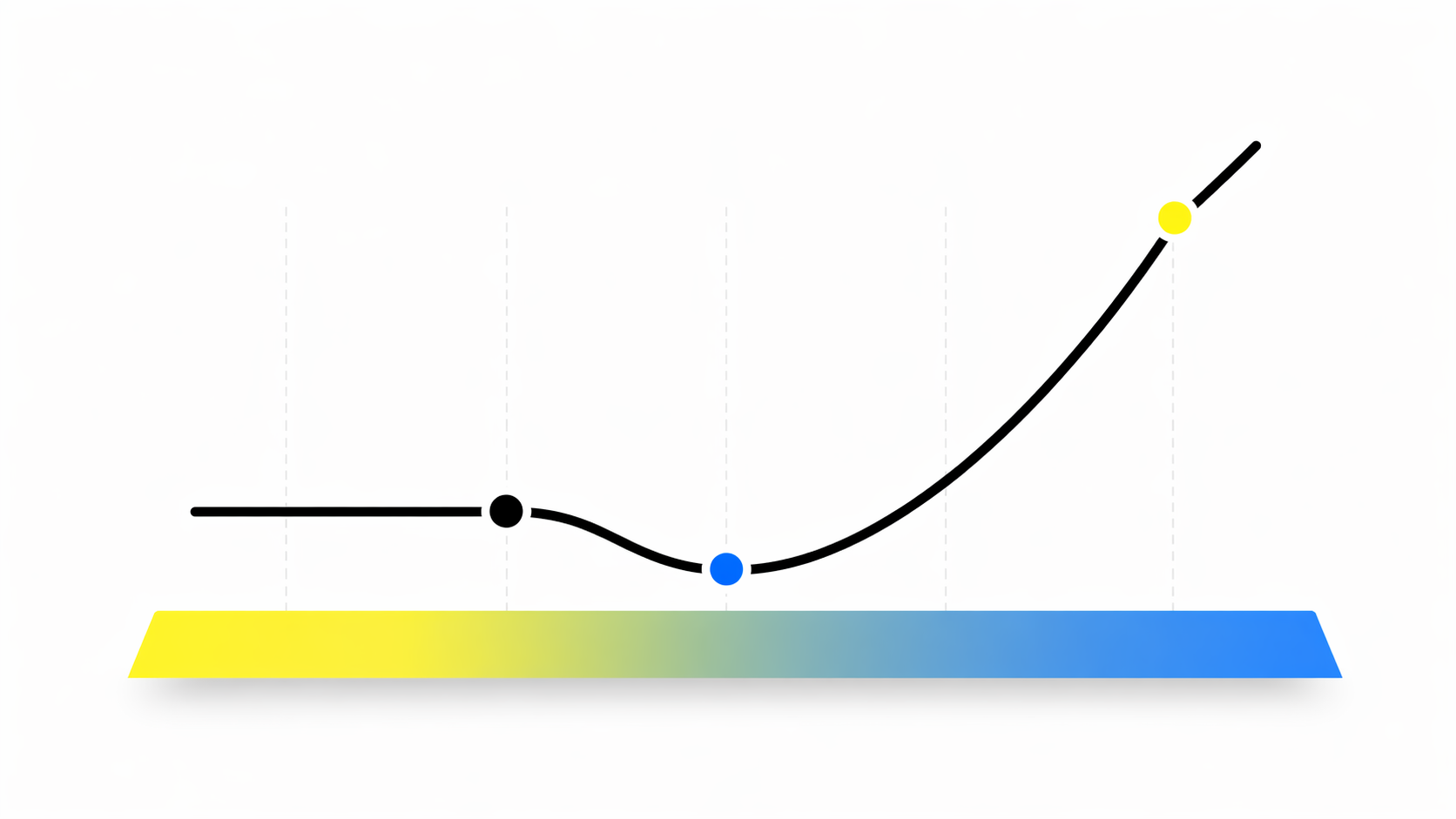
Not everything that works can be measured in the week it happens. Brand work does show up on dashboards. It shows up in branded search volume, in direct traffic, in assisted conversions over 30 and 90 day windows, and in the quiet way a cold audience starts converting like a warm one. But it takes longer than a campaign review cycle. The first few months look, on paper, like you are spending money that is not doing anything. That is the trap. A lot of marketers pull the plug at month two, right before the curve bends.
We have watched this play out on our own campaigns more than once. On a Mahindra program we ran, CPL moved from ₹319 to ₹130. Not because we added performance budget, but because a light brand layer made the audience already know the product by the time they saw the ad. The performance ads did not get smarter. The audience did.
I am not pretending every campaign behaves this neatly. Some do. Some do not. But the pattern shows up often enough now that I have stopped treating brand spend as a luxury line item we recommend only to clients with comfortable budgets. It is starting to look like the thing that decides whether the rest of the budget works.
What is actually sitting in budget sheets for 2026
The practical number emerging across our clients, and across the industry reading, is that brands scaling profitably in 2026 are shifting Meta’s share of total marketing spend from 70 to 80 percent down to 40 to 50 percent. The freed budget is not disappearing. It is moving into organic content, AI-search presence, owned audiences, and always-on brand work that used to sit under “nice to have.”
For an early stage D2C brand this will still land close to 70:30 performance heavy. For a category leader with distribution already solved, it can flip to 40:60 the other way. The ratio is not the point. The direction is.
Three things I would ask a CMO to do this quarter
First, track branded search volume as a KPI that sits next to CPL on the same dashboard. If your brand spend is working, this number moves in the direction you want before your CPL does. Most teams do not plot them side by side and so never see the relationship.
Second, ring-fence 20 to 30 percent of the budget for memory-building work, and run it always-on, not as one quarterly big-bang campaign. Always-on is where brand compounding happens. Quarterly bursts look impressive inside a deck but rarely move the needle outside one.
Third, stop judging brand work on a 7-day attribution window. Judge it on 30 and 90 days. If your tooling cannot show you the 90-day assisted picture, fix the tooling before you fix the campaign. Most of the “brand does not work” conclusions I hear are really “my measurement cannot see brand.”
One last thing
The reason I keep coming back to the phrase performance simplified, whether in client meetings, in reviews, or in my own head, is that most of what is going wrong in Indian marketing right now is not a strategy problem. It is a category error. Teams are asking performance channels to do a brand’s job, and then blaming the performance channels when the number drifts.
You do not fix that with a better bidding strategy. You fix it by letting the brand take back the work it was always meant to do.
Quietly, for most of the CMOs I talk to, that shift is already underway. It just does not have a press release on it yet.